AFC Cup
Over the years, AFC Cup finals saw their fair share of goals, drama and unforgettable celebrations. Ahead of the last AFC Cup final, the-AFC.com looks back at five of the most memorable final showdowns in the history of the competition.
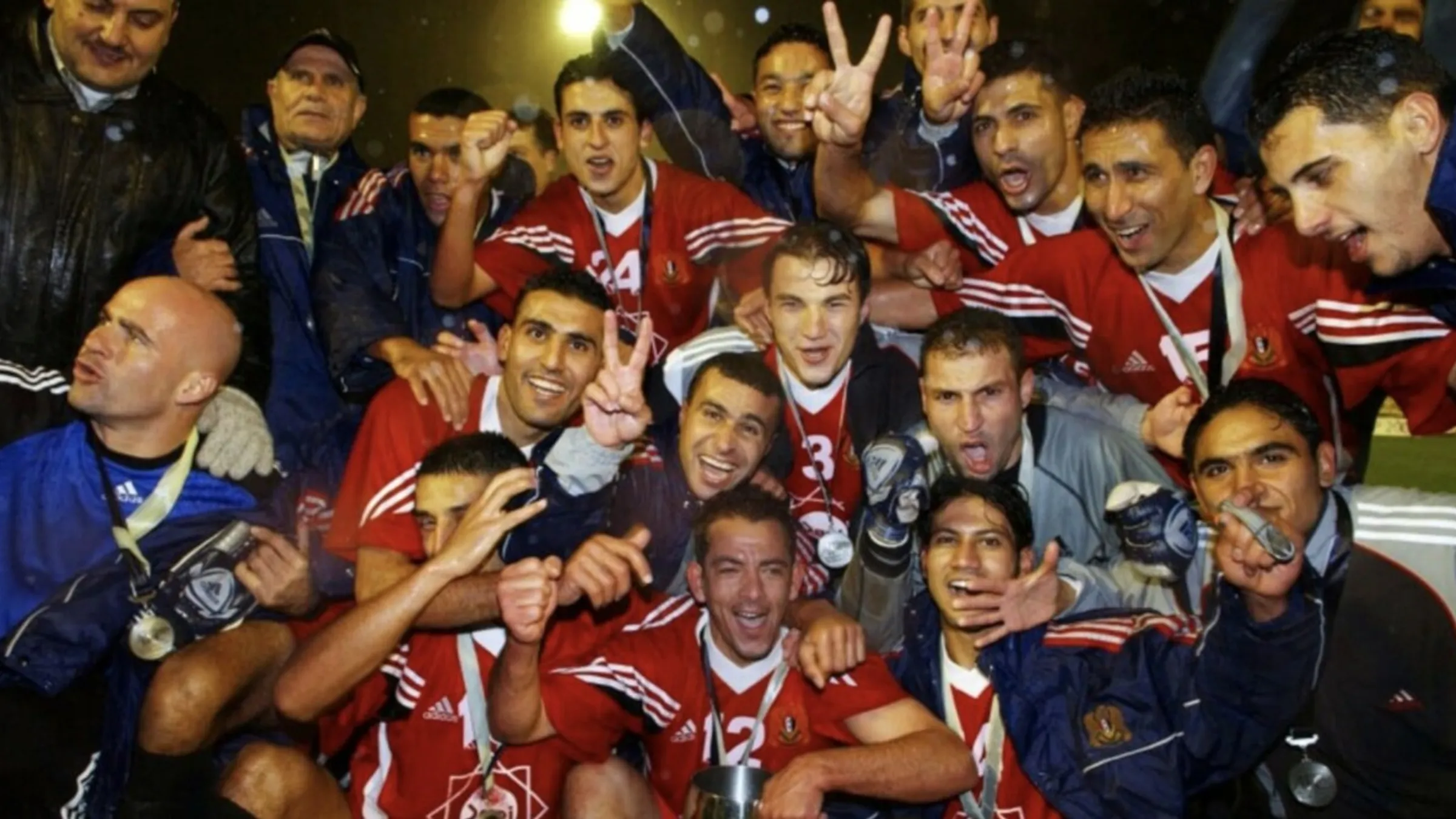
Al Jaish (SYR) v Al Wahda (SYR) – 2004
Perhaps there are no two clubs in Asian football located further apart than the AFC Cup 2023-24 final opponents, Central Coast Mariners on the Eastern coast of Australia overlooking the South Pacific Ocean and Al Ahed on the shores of the Mediterranean Sea in Lebanon.
Perhaps there are no two clubs in Asian football located further apart than the AFC Cup 2023-24 final opponents, Central Coast Mariners on the Eastern coast of Australia overlooking the South Pacific Ocean and Al Ahed on the shores of the Mediterranean Sea in Lebanon.
The contrast could not be clearer than when compared to the maiden final of the competition, which was contested by two teams located in the same district of the Syrian capital Damascus.
Al Jaish had qualified to the inaugural AFC Cup as Syrian League champions, while their neighbours Al Wahda were the Syrian Cup winners that season. Both sides cruised past their respective groups and defeated Singaporean teams in the semi-finals, with Al Jaish beating Home United 6-1 and Al Wahda overcoming Geylang United 2-1 to book a date at the Abbasiyyin Stadium, which hosted both legs of the final.

A thrilling first leg saw Al Jaish race to a 2-0 lead inside the first 32 minutes, with Zyad Chaabo opening the scoring early on and Feras Esmaeel adding his side’s second. Al Wahda looked to bounce back immediately after the restart and pulled one back within four minutes thanks to Darar Radawi, but Amer Al Abtah converted from the spot to restore Al Jaish’s two-goal lead. A late Omar Akil strike set-up a fiery second leg with Al Jaish going into the nominal home leg with a 3-2 advantage.
A tense affair a week later remained goalless for an extended period despite Al Wahda’s best efforts under the heavy rain in Damascus. The Al Wahda faithful started dreaming with just 18 minutes left when the Al Jaish goalkeeper failed to properly catch a set-piece delivery into the box, allowing the ball to fall for Nabil Al Shahmeh who swept home on the rebound. However, it was too little too late as the away goals rule meant Al Jaish climbed on the podium as the first-ever AFC Cup winners.
Al Ittihad Al Ahli Aleppo (SYR) v Qadsia SC (KUW) – 2010
It took six years after the inaugural all-Syrian final for a team from the Levantine nation to return to the AFC Cup final, and this time it was the team from the northern city of Aleppo, then known as Al Ittihad, who made it all the way in 2010.
It took six years after the inaugural all-Syrian final for a team from the Levantine nation to return to the AFC Cup final, and this time it was the team from the northern city of Aleppo, then known as Al Ittihad, who made it all the way in 2010.
Facing them in the final were a Qadsia side dreaming of repeating the success of their domestic rivals Kuwait SC in the previous edition of the competition. The Kuwaitis had navigated their knockout route past India’s Churchill Brothers, Thai Port and Bahrain’s Riffa SC to reach the final, while Al Ittihad beat two Kuwaiti teams in defending champions Kuwait SC, Kazma SC and Thailand’s Muangthong United to become the third Syrian team to reach the final.

A record crowd of 58,604 fans gathered at Jaber International Stadium in Kuwait City, and the vast majority of them erupted with joy just before the half-hour mark when Aziz Mashaan skillfully led a quick counter-attack, feeding Hamad Al Enezi who finished from a tight angle to put the hosts in the lead of the single-leg final.
Eight minutes into the second half, a Taha Dyab cross from a set-piece seemed headed towards a comfortable save by Kuwaiti goalkeeper Nawaf Al Khaldi, but somehow evaded him and found its way to the back of the net to restore parity.
The game went to a penalty shootout where Al Ittihad goalkeeper Khalid Osman saved from his countryman Feras Al Khatib before Fahad Al Ansari skied his attempt from 11 yards, allowing the Syrian side to emerge 4-2 winners and lift the trophy.
FC Nasaf (UZB) vs Kuwait SC (KUW) – 2011
FC Nasaf stormed into the 2011 knockout rounds with a perfect six wins from six and 30 goals scored. It was slightly tougher from then onwards as the Uzbeks edged Jordanian pair Al Faisaly and Al Wehdat 2-1 either side of a penalty shootout victory over Thailand’s Chonburi FC.
FC Nasaf stormed into the 2011 knockout rounds with a perfect six wins from six and 30 goals scored. It was slightly tougher from then onwards as the Uzbeks edged Jordanian pair Al Faisaly and Al Wehdat 2-1 either side of a penalty shootout victory over Thailand’s Chonburi FC.
Champions in 2009, Kuwait SC’s run to the final was far from smooth as they lost twice in the group stage and needed penalties to get past domestic rivals Qadsia in the Round of 16. Further wins over Thailand’s Muangthong United and Iraq’s Erbil SC secured a return to the final.
The stage was set for the final in Qarshi, with Nasaf – in what was the eighth edition – becoming the first side from outside West Asia to appear in the showpiece event. Spurred on by almost 16,000 at Markaziy Stadium, Ilkhom Shomurodov turned in from close range to put the hosts a goal up shortly after the hour, and things were about to get even better.
Just over two minutes later, Nasaf found space down the right and centred for Andrejs Pereplotkins, who darted towards the near post and produced a cheeky finish to double Nasaf’s advantage with what became one of the tournament’s iconic goals. Chasing their second title, Kuwait were not done yet, and Boris Kaby pulled one back midway through the half.
But they were unable to find an equaliser as Nasaf held out to send the home crowd into raptures at full-time as the Central Asians finally ended the West’s dominance. Kuwait returned to win successive titles in 2012 and 2013 while Nasaf, a decade on, made a long-awaited return to the AFC Cup in 2021 but fell just short of repeating their feat after losing to Bahrain’s Muharraq Club in the final.
FC Istiklol (TJK) vs Johor Darul Ta’zim (MAS) – 2015
Just like Nasaf did for Central Asia in 2011, Johor Darul Ta’zim flew the flag for ASEAN by becoming the first team from the region to make it to an AFC Cup final. And blessed with a squad featuring domestic stars such as Malaysia’s 2010 AFF Cup heroes Safiq Rahim and Safee Sali as well as imports like Hariss Harun, Luciano Figueroa and Leandro Velazquez, the Southern Tigers set their sights on the title.
Just like Nasaf did for Central Asia in 2011, Johor Darul Ta’zim flew the flag for ASEAN by becoming the first team from the region to make it to an AFC Cup final. And blessed with a squad featuring domestic stars such as Malaysia’s 2010 AFF Cup heroes Safiq Rahim and Safee Sali as well as imports like Hariss Harun, Luciano Figueroa and Leandro Velazquez, the Southern Tigers set their sights on the title.
However, JDT faced a tall order against FC Istiklol, the Tajikistan champions who had surprised many by reaching the final on their debut appearance and had home advantage in Dushanbe in the showpiece event. The last Malaysian side to visit Pamir Stadium, Pahang in the quarter-finals, were unable to live with the hosts as they ran out 4-0 winners in the first leg before advancing 5-3 on aggregate.
In front of 18,000 spectators in the first final to feature two sides from outside of West Asia, the hosts were on the front foot from the off and defender Aidil Zaquan had to heroically make a goal line clearance to stop Manuchehr Dzhalilov from giving Istiklol an early lead before Khurshed Makhmudov’s goal was wiped off for a foul in the build-up.
But JDT’s moment came in the 23rd minute when Safiq’s corner was fisted out by Istiklol keeper Nikola Stosic only as far as Velazquez, who volleyed the ball into the back of the net to give the Malaysians a vital breakthrough. It would prove to be the only goal of the game as Mario Gomez’s well-drilled side kept out Istiklol’s incessant attacks to take the historic title on their flight back to Malaysia.
Istiklol would return to the final two years later, only to lose at home to Air Force Club, while continuing to dominate their domestic scene and going on to achieve some famous results in the AFC Champions League™. JDT followed a similar upward trajectory, winning numerous titles in their homeland and also pulling off some major upsets in the continent’s premier club competition.
Air Force Club (IRQ) vs Bengaluru FC (IND) – 2016
No Indian club had made it to the final of the AFC Cup until Bengaluru FC turned out for the 2016 campaign under their new head coach Albert Roca. In his first game in charge, the Spaniard guided Bengaluru to a 1-0 victory against Singapore’s Tampines Rovers before a goalless draw at Jalan Besar Stadium sent them through to the semi-finals.
No Indian club had made it to the final of the AFC Cup until Bengaluru FC turned out for the 2016 campaign under their new head coach Albert Roca. In his first game in charge, the Spaniard guided Bengaluru to a 1-0 victory against Singapore’s Tampines Rovers before a goalless draw at Jalan Besar Stadium sent them through to the semi-finals.
Dempo SC and East Bengal had made it that far in 2008 and 2013 only to be beaten comprehensively by Safa SC and Kuwait SC respectively. Many expected the same fate to befall the Blues against Johor Darul Ta’zim who had beaten them twice in the group stage. But after a 1-1 draw in Johor Bahru, Bengaluru captain Sunil Chhetri came up with a double for a 4-2 aggregate win against the defending champions to become the first club from South Asia to progress to the final.

Air Force Club vs JSW Bengaluru FC (AFC Cup 2016: Final)
They were up against Iraq’s Air Force Club – a side looking to write their own piece of history by winning the competition in their debut appearance. The Baghdad side were soaring high, winning all but one of their six group fixtures before a domineering run in the knockout stages – powered by a prolific Hammadi Ahmed who scored a phenomenal 15 goals on their road to the final but reserved his most impactful strike for the title clash.
The Iraqis dominated the final at Suheim Bin Hamad Stadium in Doha with their physicality and aerial prowess, but Bengaluru goalkeeper Lalthuammawia Ralte looked impenetrable throughout despite facing a barrage of shots from the Air Force attack. At the opposite end, Chhetri and CK Vineeth put in the work but saw very little of the ball as Basim Qasim’s side stifled the Indian opposition.
The defining moment of the game came in the 70th minute when Amjad Radhi took Ralte out of the equation by squaring the ball for Ahmed to tap home from close range for his 16th goal of the campaign. That breakthrough proved to be the only goal of the final and the start of an unprecedented run that not only saw Air Force Club become the first Iraqi side to win the tournament but also the first to win it an incredible three times in a row.
Related News

Item 1 of 5