


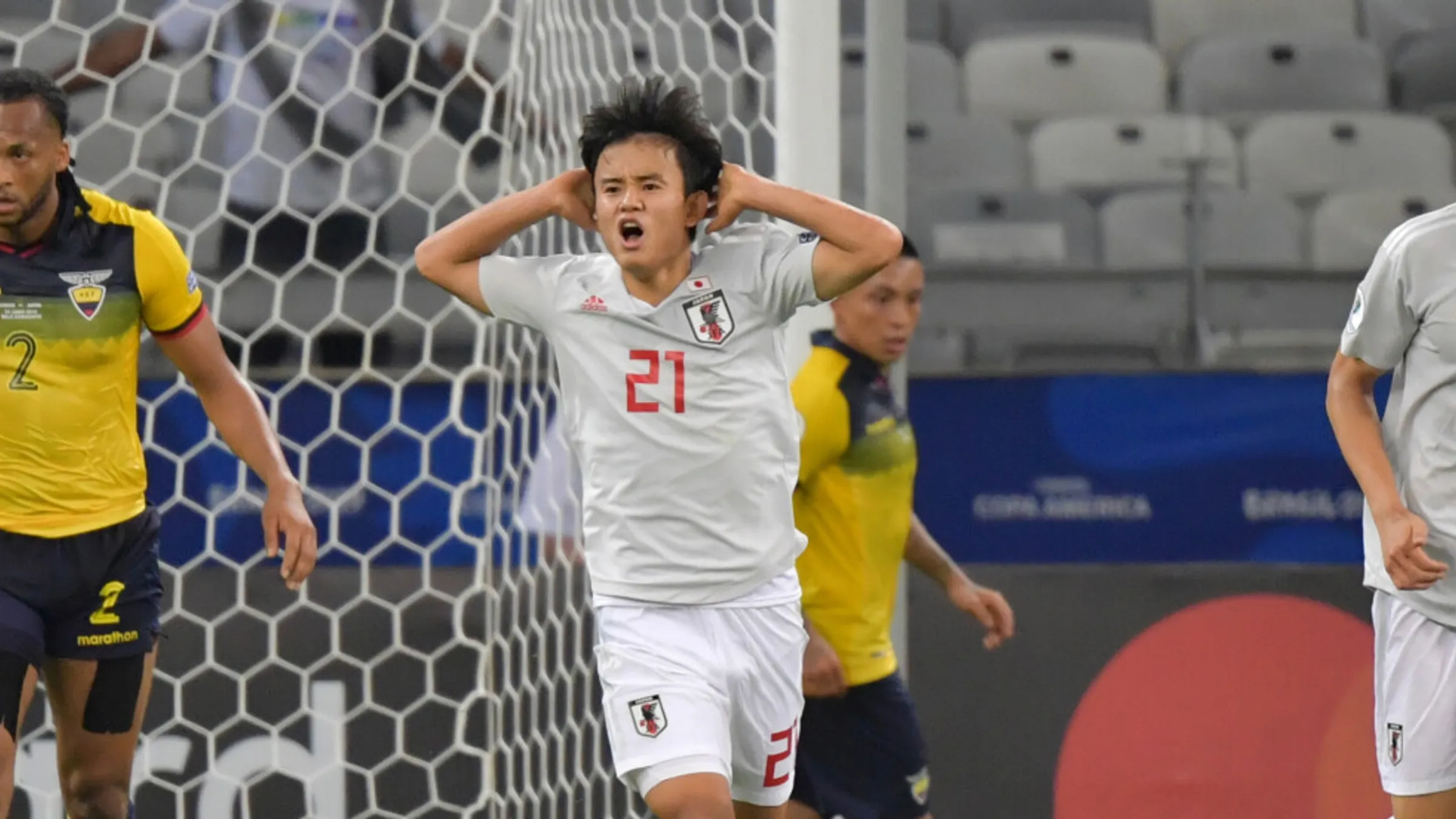
Kubo, the highly-rated superstar-in-waiting, had already played his last game for the Gasmen – a 3-1 win over Oita Trinita on June 1 – before inking a five-year deal with the Spanish giants and making his senior debut for the Japan national team at the Copa America in Brazil. It had been an eventful month for a player who only turned 18 on June 4.
That date, though, was significant as it meant Kubo was free to sign a deal that would take him back to Europe after a four-year absence, having returned to Japan in March 2015 following his release from FC Barcelona.
After working his way through FC Tokyo’s youth teams and into the senior squad – via a short loan stint last year with Yokohama F Marinos – Kubo is now ready to return to the Iberian peninsula, where the next phase of his closely-watched career awaits.
“I won’t say everything has gone well but I feel very proud that, with my effort and the help of everyone, I am now taking off to the world as a footballer carrying Tokyo,” Kubo told fans from the pitch after the club broadcast a farewell video on the stadium screens.
“I’m not Takefusa Kubo of FC Tokyo any longer, but I will be a player who has been with FC Tokyo, taking pride in FC Tokyo. There will be some tough times, but every time I face those I will remember this video and cheer myself up.”
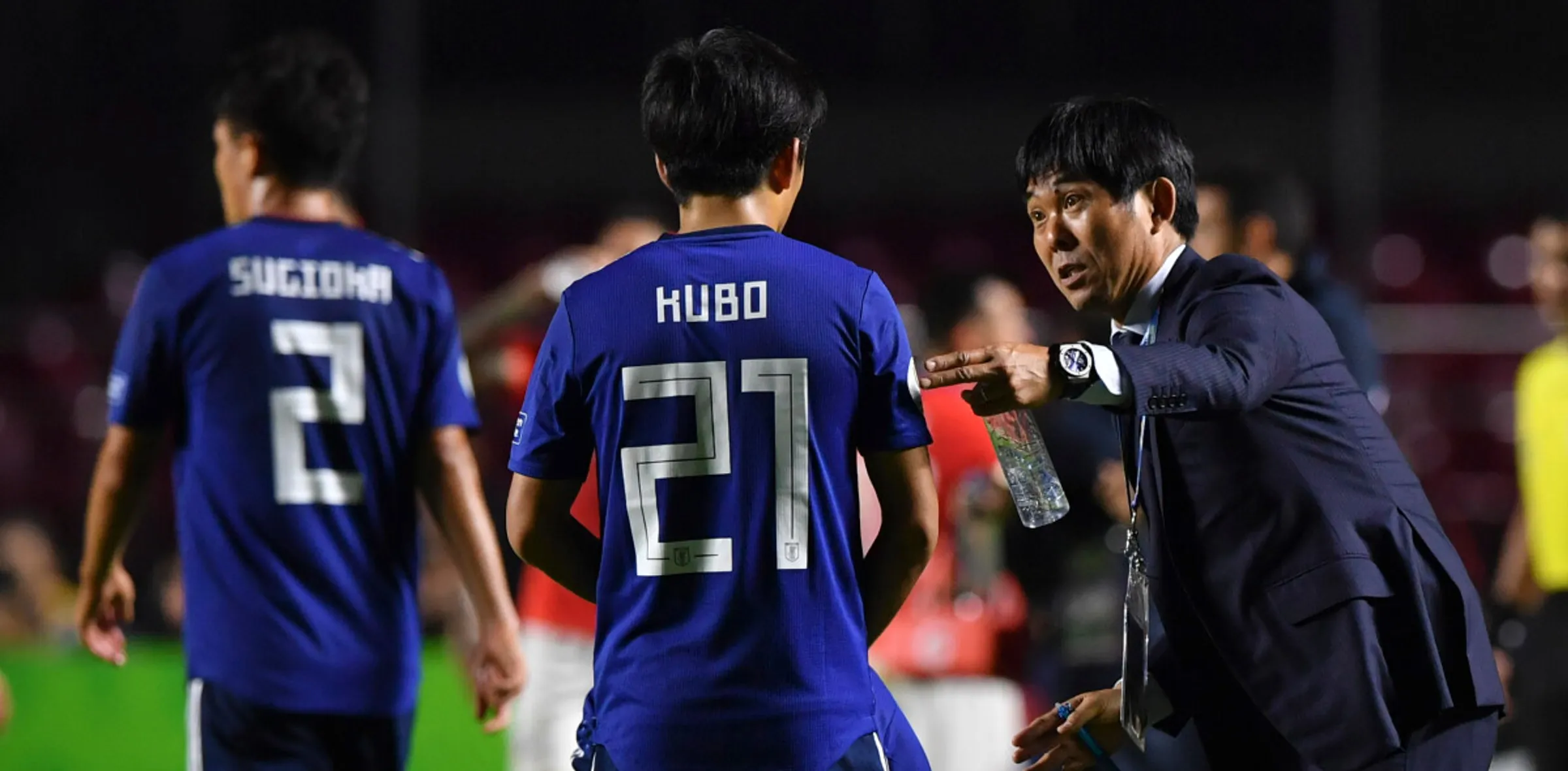
Kubo moves to Madrid – where he will initially join Real Madrid Castilla, the club’s reserve team – with the baggage of expectation on his shoulders.
His spell at Barcelona’s La Masia academy, which started when he moved to Spain aged 10, was so successful he has been burdened with the tag of ‘Japan’s Lionel Messi’, a label that has stuck even though he has dismissed those comparisons.
Adding fuel to the ever-growing hype, he returned from Brazil with his reputation further enhanced by an impressive debut for Hajime Moriyasu’s Samurai Blue side at the Copa America.
That stint, which featured his debut appearance against Chile and another start in the final group game against Ecuador, won Kubo many admirers, with former Japan national team boss Philippe Troussier among them.
“I was so impressed,” says the Frenchman, who led Japan at the 2002 FIFA World Cup Finals. “He’s quick with the ball and quick without the ball. He has good agility with the ball and good control and passing.
“I know everybody compares him with Messi and I think at the same age Messi had the same agility. He played regularly this year with FC Tokyo and it’s a sign to show he has a very good talent, especially regarding his young age.”

Troussier knows better than most what it feels like to have a precocious young Japanese talent on his hands having nurtured the early career of Shinji Ono, the last player from the country to garner similar attention so early in his career.
And he believes that, rather than dismissing the comparisons with Barcelona’s legendary Argentinian, the 18-year-old should embrace them.
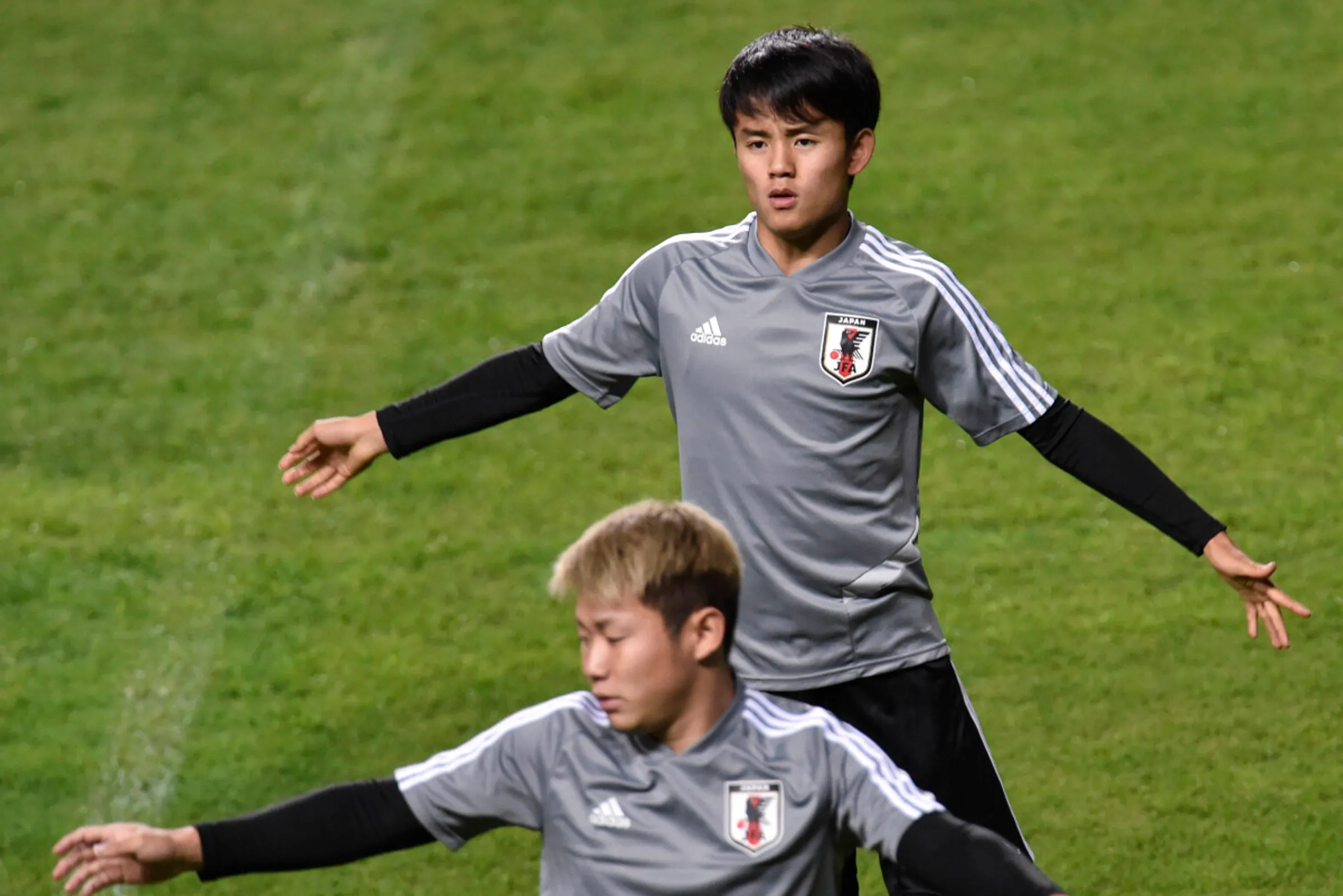
“He has good technique and speed and he has all the ingredients to become a player like Messi,” Troussier said. “And if he becomes a player like Messi it will be amazing.
“Of course I don’t know if he will graduate and it’s not easy to win a place in Madrid but we will see. If he has signed a contract with a club like Madrid, we know they are a great club to evaluate players and I have no worries about him. I'm sure we can see him soon, in the next year or even the next six months. I’m so impressed.”

Such has been the impact already of Kubo that Troussier feels his influence can extend beyond the field of play. With Tokyo hosting next year’s Olympic Games, the youngster can be a catalyst for further development of the sport in Japan and throughout the rest of the continent.
“Japan and Asia need this kind of ambassador,” he says. “If we say we have a player like Messi in Japan I’m not sure people outside are convinced, but it’s true that we do and hopefully he can be a success."
“We need to pull the media and the fans together. We need an ambassador or a special star. It’s a big pressure for the player because everyone will follow him everywhere, even in Madrid, but this kind of process can build up the motivation of young boys in Japan and also make good business for the media and sponsors.
“The football industry around the game needs this process and it’s good news too for the 2020 Olympic Games. We need to be talking about football and Kubo will do that. He is a special talent.”
The Olympic football tournament, in which Kubo should feature prominently for Japan, is a year away while Kubo is almost certain to play a role, too, in his country's attempt to qualify for the 2022 FIFA World Cup Qatar.
But no matter how his career pans out, Kubo will forever remain linked to FC Tokyo, the club he called home before his Spanish dream was resurrected.
“It’s been three-and-a-half years since I came to Tokyo and it’s been such a fulfilling time that I didn’t feel like leaving,” Kubo said on Saturday. “It was an agonising decision. However, I am proud of the decision I’ve made and I won’t forget the time I spent here with Tokyo for the rest of my life.”
Photos: AFP, AFC
