
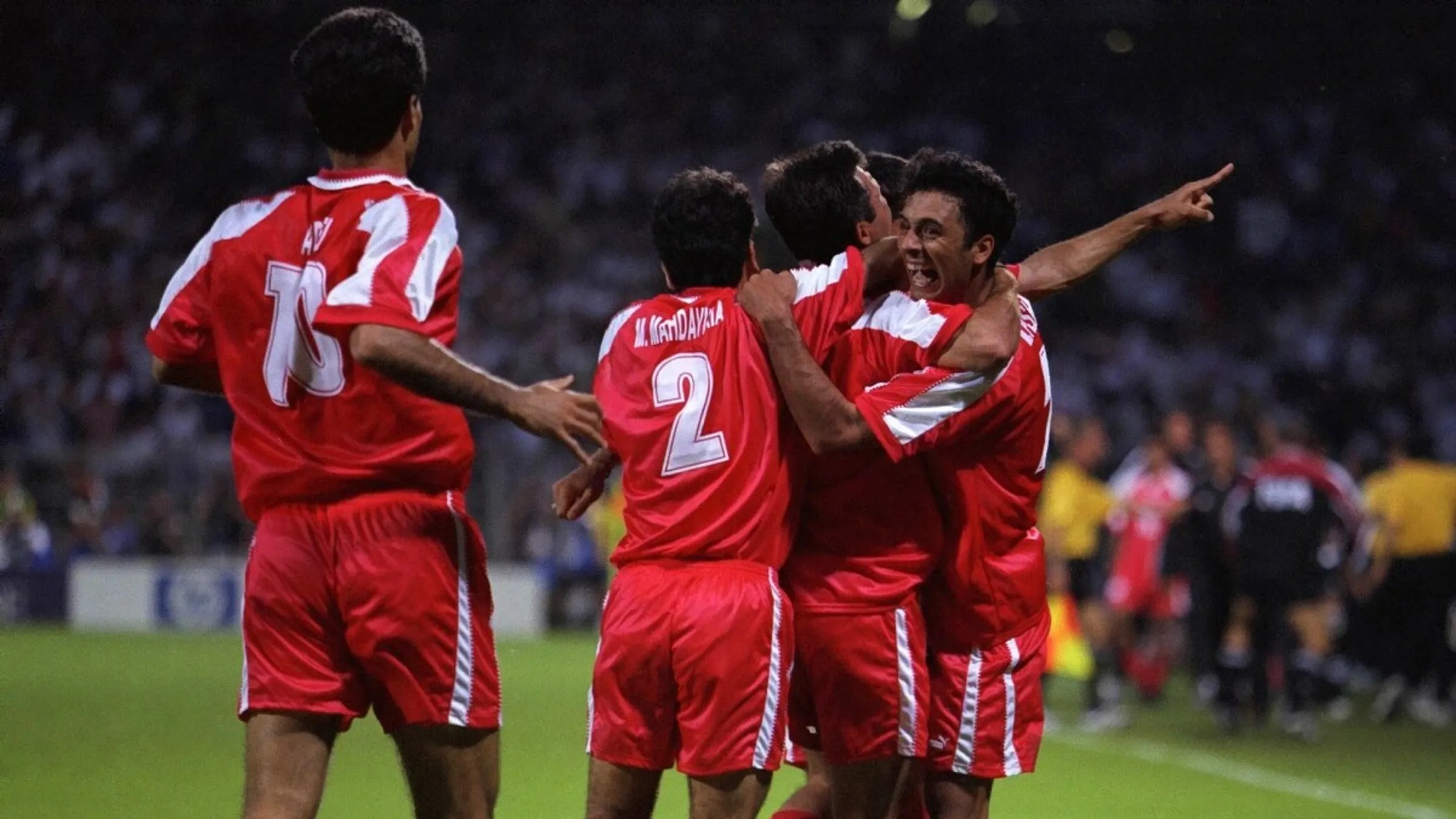
FIFA World Cup
With the World Cup expanding into 32 teams for the first time, Asia benefited from 3.5 seats at France 1998. Just as they did in the previous edition, Saudi Arabia and Korea Republic were present, while Japan took the third spot and Islamic Republic of Iran ensured the AFC had a four-team contingent for the first-time ever, snatching the qualification ticket in the Intercontinental Playoff from Australia, then representing the OFC.
Japan make tournament bow
Four years after the ‘Agony of Doha’ when Japan missed out on qualifying for the 1994 edition after conceding a last-minute goal against Iraq, the Samurai Blue finally booked their ticket to their first FIFA World Cup when Masayuki Okano’s extra-time golden goal against the Islamic Republic of Iran secured their place in the 1998 tournament in France.
Four years after the ‘Agony of Doha’ when Japan missed out on qualifying for the 1994 edition after conceding a last-minute goal against Iraq, the Samurai Blue finally booked their ticket to their first FIFA World Cup when Masayuki Okano’s extra-time golden goal against the Islamic Republic of Iran secured their place in the 1998 tournament in France.

The East Asians had begun the decade by being crowned Asian champions for the first time in 1992 and, amid the growing popularity of football in Japan, where the launch of the J.League coincided with professional football taking off in the country, they were now entering the global stage.
And it was to be the tournament in which the world got to know a 21-year-old Hidetoshi Nakata (pictured above), who, along with the likes of striker Masashi Nakayama, centre-back Masami Ihara and goalkeeper Yoshikatsu Kawaguchi, were trailblazers for their country as they kicked off the first of what has led to eight successive FIFA World Cups.
And it was to be the tournament in which the world got to know a 21-year-old Hidetoshi Nakata (pictured above), who, along with the likes of striker Masashi Nakayama, centre-back Masami Ihara and goalkeeper Yoshikatsu Kawaguchi, were trailblazers for their country as they kicked off the first of what has led to eight successive FIFA World Cups.
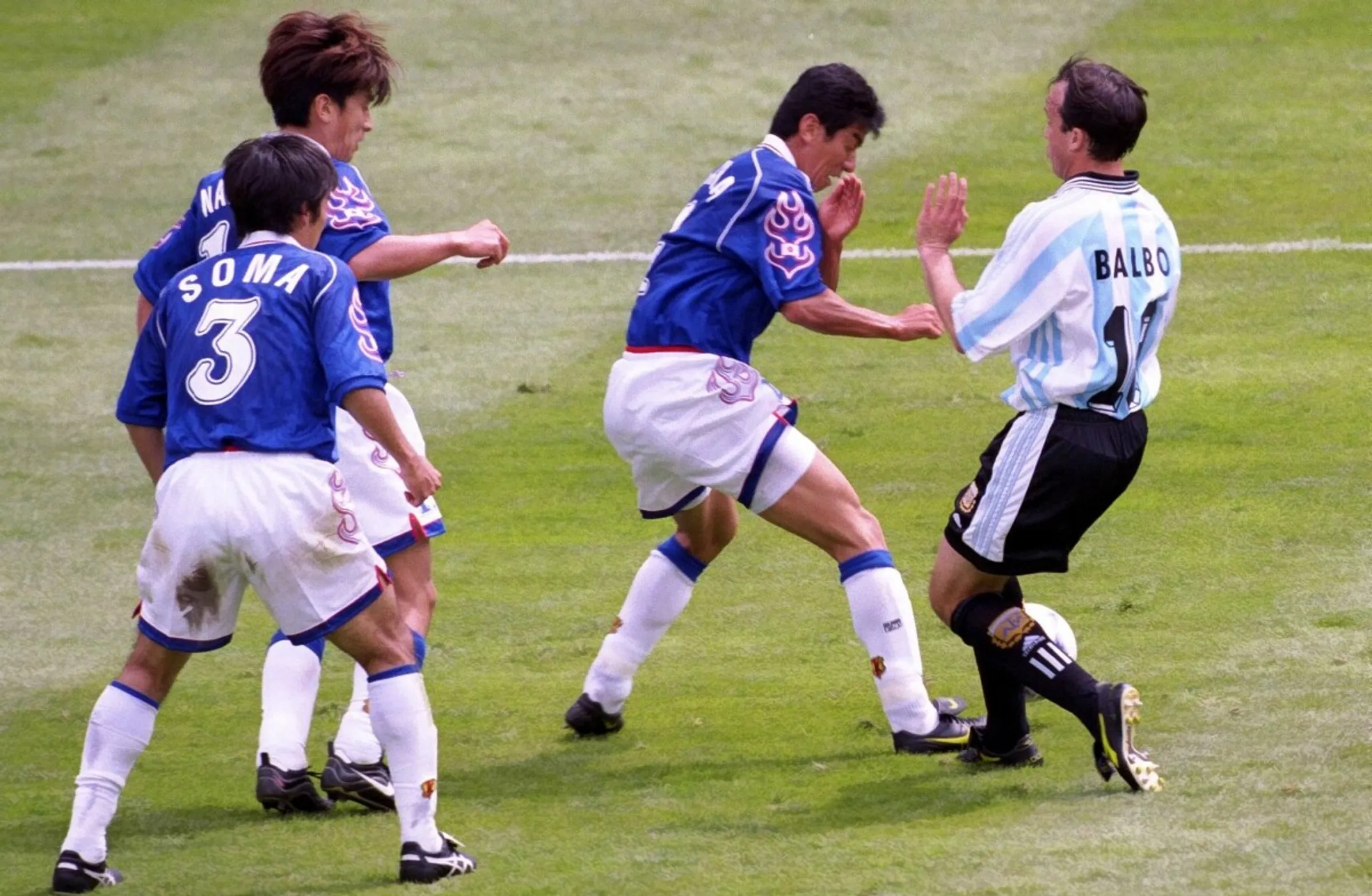
An opening game in Toulouse against two-time FIFA World Cup winners Argentina, whose side featured Juan Sebastian Veron, Janier Zanetti and Diego Simeone, could hardly have come any bigger, but Takeshi Okada’s Japan were not overawed. The Samurai Blue held their own, ultimately going down 1-0 thanks to La Albiceleste’s biggest star, Gabriel Batistuta, when the ball broke kindly to him in the box just before the half hour.
A Croatia side who would go on to finish third came next in Nantes and Japan defended resolutely, keeping the Europeans at bay with some fine defending until late in the game. But, with just 13 minutes remaining and the hope of a draw increasing, the ball fell to Davor Suker at the back post and his low left-foot drive went under Kawaguchi to hand the Croatians a 1-0 victory.
A Croatia side who would go on to finish third came next in Nantes and Japan defended resolutely, keeping the Europeans at bay with some fine defending until late in the game. But, with just 13 minutes remaining and the hope of a draw increasing, the ball fell to Davor Suker at the back post and his low left-foot drive went under Kawaguchi to hand the Croatians a 1-0 victory.
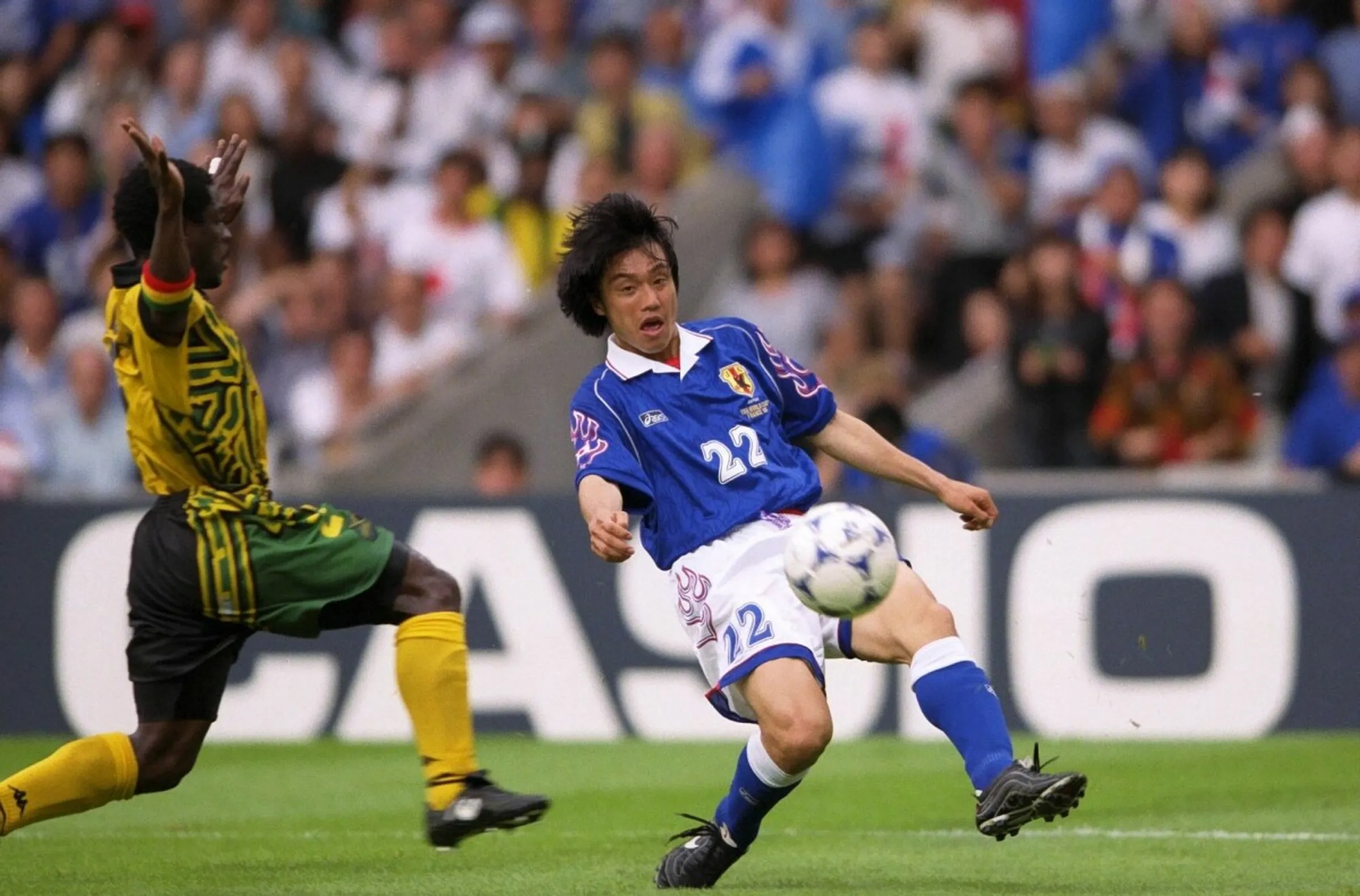
By the time the third match against fellow debutants Jamaica arrived, both teams were already eliminated but there remained plenty to play for. A Theodore Whitmore brace saw Japan two down by the 54th minute, but Nakayama would then write his name into the history books by scoring Japan’s first-ever FIFA World Cup goal after Naoki Soma’s cross was headed back across goal by Wagner Lopes.
While Japan exited following three defeats from three, the campaign marked the start of their rise on the global platform. Nakata would go on to move to Italy, winning Serie A with Roma and the Coppa Italia with Parma in the ensuing years before, as co-hosts with Korea Republic in 2002, the Samurai Blue advanced to the knockout rounds for the first time.
While Japan exited following three defeats from three, the campaign marked the start of their rise on the global platform. Nakata would go on to move to Italy, winning Serie A with Roma and the Coppa Italia with Parma in the ensuing years before, as co-hosts with Korea Republic in 2002, the Samurai Blue advanced to the knockout rounds for the first time.
IR Iran back with a bang
Twenty years after making their FIFA World Cup debut in Argentina 1978, Iran pipped Australia in the Intercontinental Playoff on away goals, to make their return to the world stage where they were drawn against Germany, Yugoslavia, and the United States in Group F.
Twenty years after making their FIFA World Cup debut in Argentina 1978, Iran pipped Australia in the Intercontinental Playoff on away goals, to make their return to the world stage where they were drawn against Germany, Yugoslavia, and the United States in Group F.
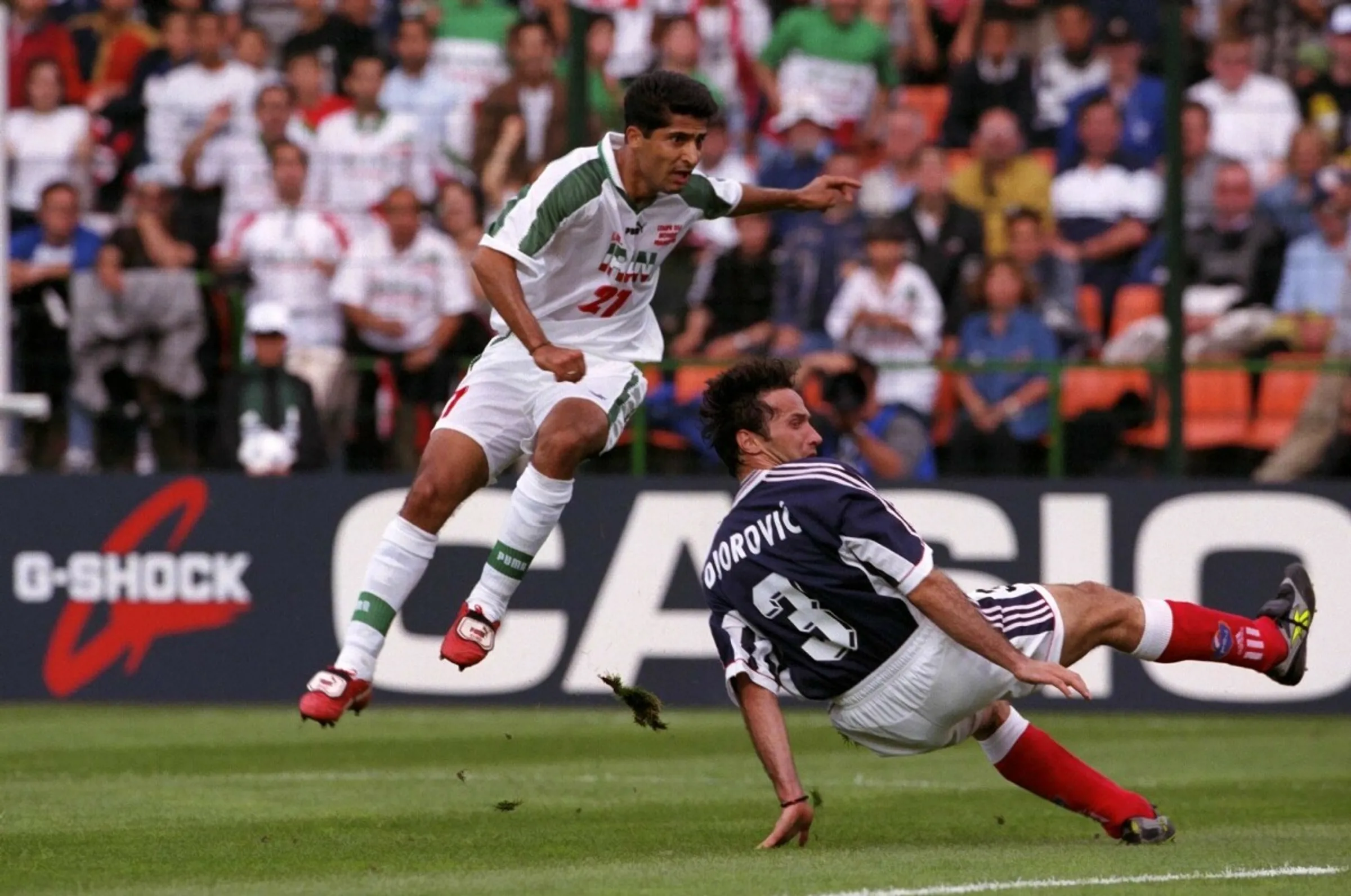
First up against Yugoslavia, coach Jalal Talebi’s inexperienced men suffered a narrow 1-0 loss courtesy of a Sinisa Mihajlovic trademark free-kick.
At Lyon’s iconic Stade Gerland, next up for Team Melli was an enticing tie against the United States. With a little over five minutes to go before the break, Javad Zarincheh picked the onrushing Hamid Estili in the box with a cross, the latter headed high above the reach of goalkeeper Kasey Keller to open the scoring for Talebi’s side.
Shortly before the end of the game, Mahdivikia charged goalwards unchallenged through the USA’s half of the pitch before doubling the lead, with Brian McBride halving the deficit three minutes later. No better way for the Iranians to get their first-ever World Cup win.
The biggest challenge of the tournament arrived on the final matchday with European champions Germany the third opponents.
Despite moments of promise, a seven-minute lapse in concentration saw goalkeeper Ahmad Reza Abedzadeh beaten by Oliver Bierhoff and Jurgen Klinsmann, sending Iran out of the FIFA World Cup but not without a first win to savour and young talent such as Mahdivikia shining, going on to play over 100 games for his country until he retired from international football in 2009.
Despite moments of promise, a seven-minute lapse in concentration saw goalkeeper Ahmad Reza Abedzadeh beaten by Oliver Bierhoff and Jurgen Klinsmann, sending Iran out of the FIFA World Cup but not without a first win to savour and young talent such as Mahdivikia shining, going on to play over 100 games for his country until he retired from international football in 2009.
Korea Republic endure disappointing campaign
Two points from three games had seen Korea Republic leave the United States with heads held high four years earlier but, in truth, they failed to reach similar heights in 1998 under the guidance of the legendary Cha Bum-kun.
Two points from three games had seen Korea Republic leave the United States with heads held high four years earlier but, in truth, they failed to reach similar heights in 1998 under the guidance of the legendary Cha Bum-kun.

It began well enough when Ha Seok-ju’s deflected free-kick gave them the lead inside 30 minutes against Mexico, but the goalscorer’s dismissal for a rash tackle soon after ensured an uphill battle. Ricardo Pelaez levelled proceedings shortly into the second half before a Luis Hernandez double sank the Taeguk Warriors.
If the East Asians could point to misfortune in their first match, in the second they were simply outplayed by the Netherlands. Phillip Cocu and Marc Overmars put the Dutch two up by the break, with goals from Dennis Bergkamp, Pierre van Hooijdonk and Ronald de Boer rounding out a comprehensive 5-0 scoreline that eliminated Cha’s side.
If the East Asians could point to misfortune in their first match, in the second they were simply outplayed by the Netherlands. Phillip Cocu and Marc Overmars put the Dutch two up by the break, with goals from Dennis Bergkamp, Pierre van Hooijdonk and Ronald de Boer rounding out a comprehensive 5-0 scoreline that eliminated Cha’s side.
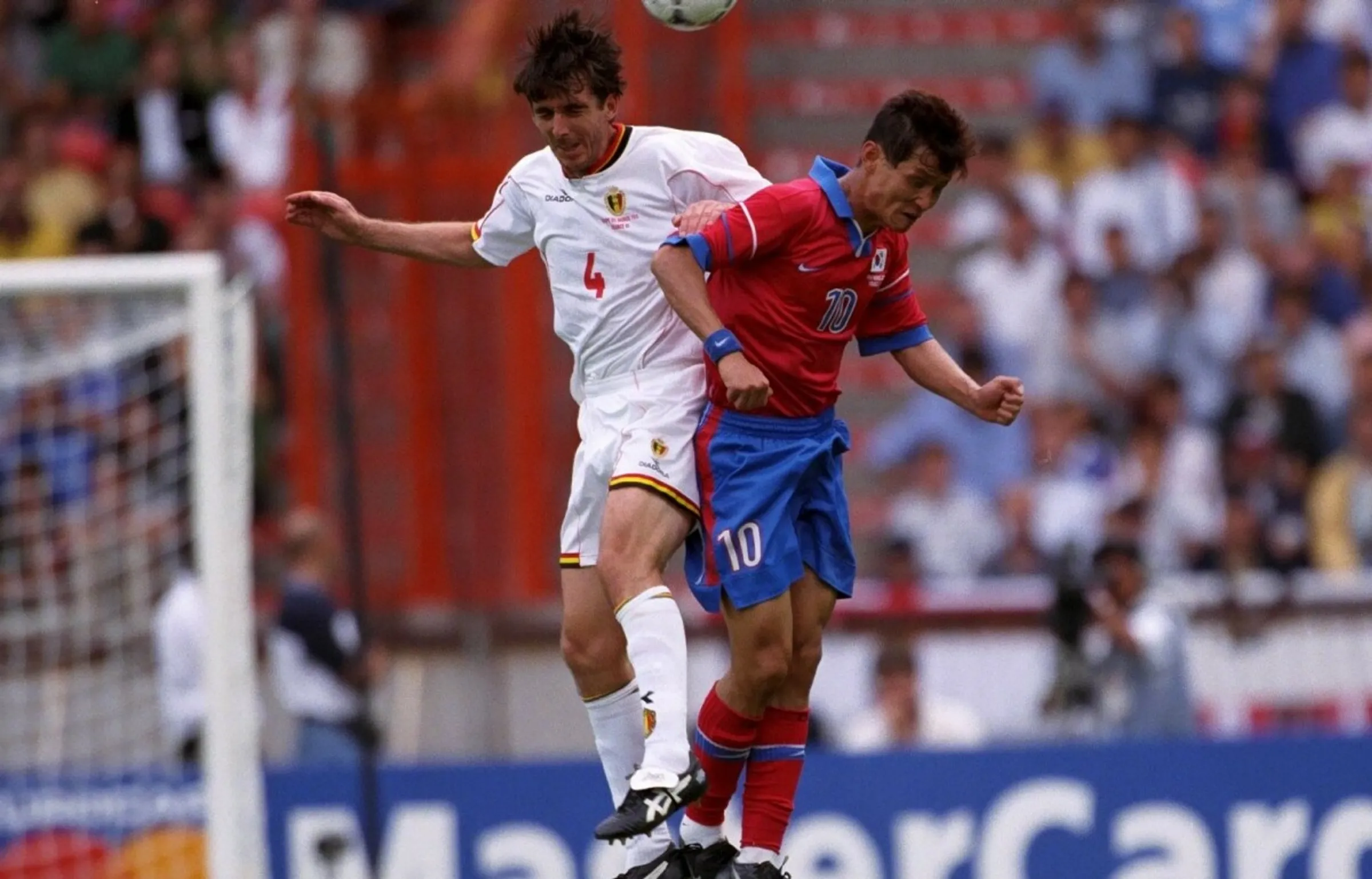
When Luc Nilis fired Belgium into an early lead on Matchday Three, Korea’s heads could have dropped. However, after Nilis struck the woodwork in the second half, the Taeguk Warriors fought back to secure a commendable point, with defender Yoo Sang-chul finishing at the back post with a little under 20 minutes to play to earn the East Asians their only point of the campaign.
After the disappointing exit, Korea Republic would go on to deliver the best performance ever by an Asian nation when, on home soil in the co-hosted FIFA World Cup with Japan four years later, they produced one of the most remarkable stories in the tournament’s history by marching all the way to the semi-finals.
After the disappointing exit, Korea Republic would go on to deliver the best performance ever by an Asian nation when, on home soil in the co-hosted FIFA World Cup with Japan four years later, they produced one of the most remarkable stories in the tournament’s history by marching all the way to the semi-finals.
Uphill battle for Saudi Arabia
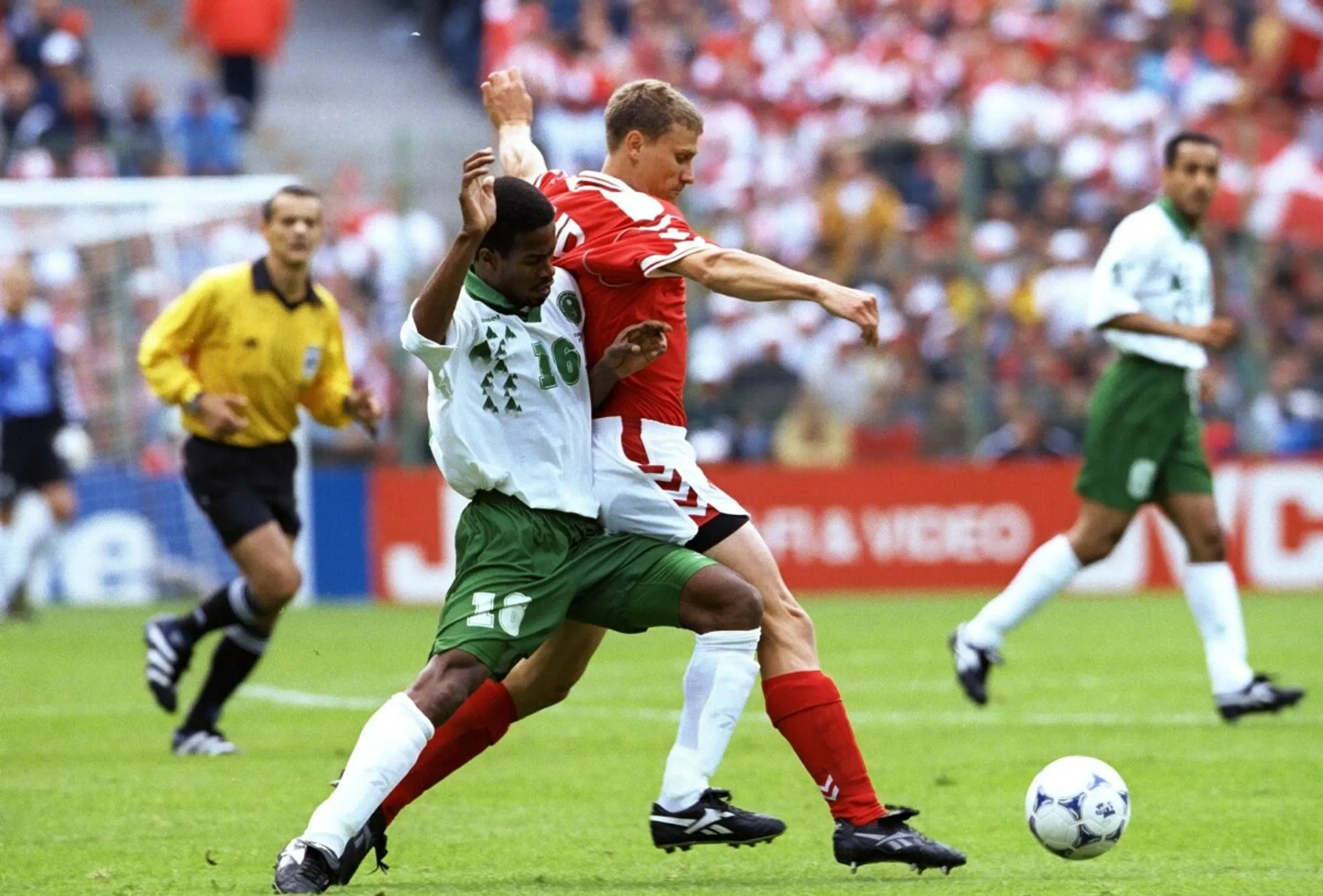
Having stunned the world four years earlier, reigning AFC Asian Cup™ champions Saudi Arabia had high hopes but had their work cut out for them in a tough Group C against hosts and eventual world champions France, 1992 European champions Denmark and Africa Cup of Nations champions South Africa.
Led by 1994 World Cup winner Carlos Alberto Parreira, Saudi opened their campaign with a narrow 1-0 defeat to Denmark courtesy of a Marc Rieper header with 21 minutes to go, with Saeed Al Owairan having Peter Schmeichel parry out a thunderous free-kick earlier in the game while Mohamed Al Deayea kept the damage from the Laudrup brothers limited.
Led by 1994 World Cup winner Carlos Alberto Parreira, Saudi opened their campaign with a narrow 1-0 defeat to Denmark courtesy of a Marc Rieper header with 21 minutes to go, with Saeed Al Owairan having Peter Schmeichel parry out a thunderous free-kick earlier in the game while Mohamed Al Deayea kept the damage from the Laudrup brothers limited.
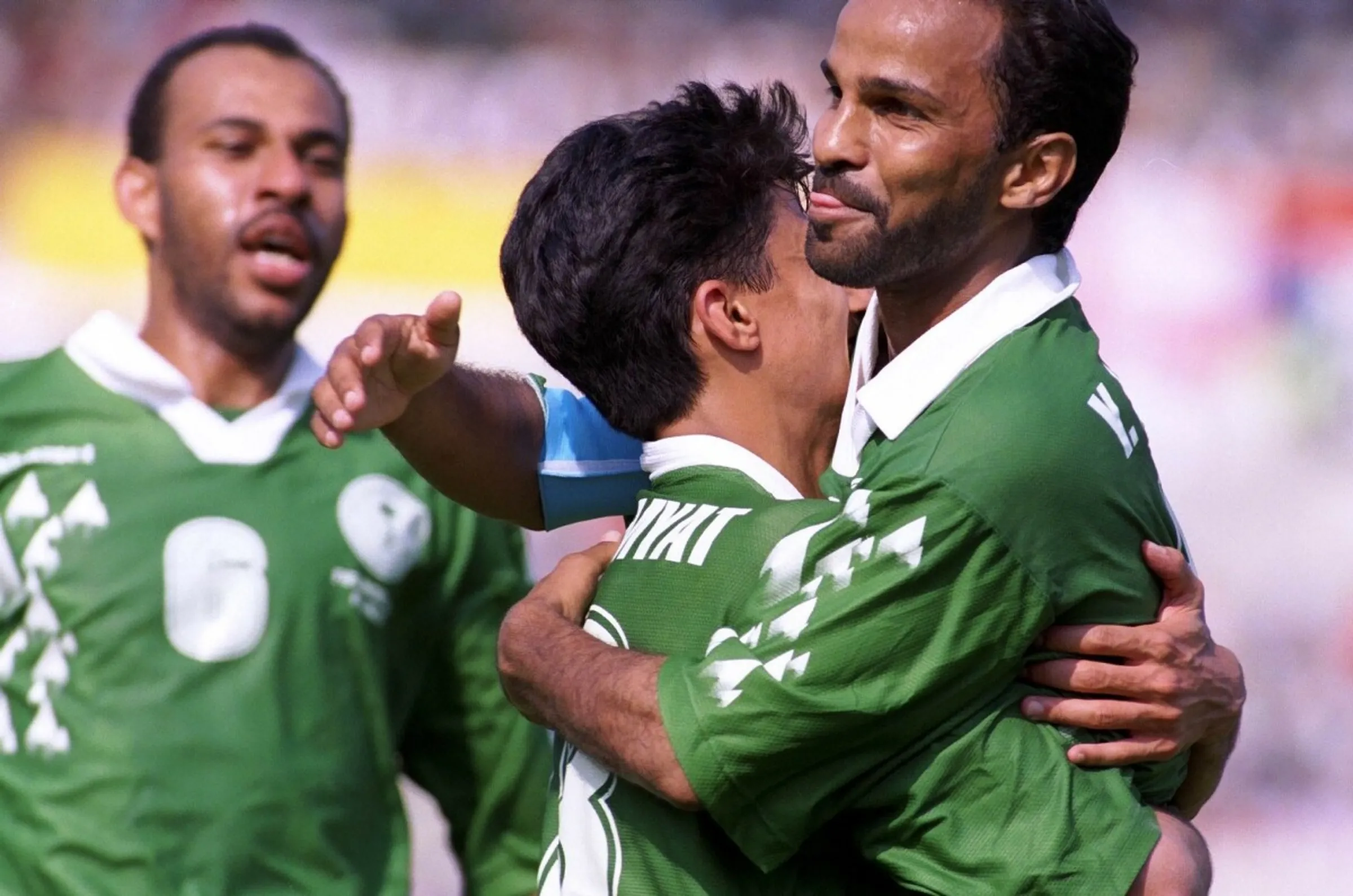
France had dismantled South Africa 3-0, and they proved to be unstoppable at the Stade de France as Saudi Arabia failed to come out with a result that could save their campaign, losing 4-0. The late Mohamed Al Khilaiwi was sent off just 19 minutes into the match, with the game uneven for almost one hour of play until Zinedine Zidane also got himself sent off too.
With qualification hopes evaporating, Saudi Arabia set out to bow on a positive note and did so in a game that witnessed three penalties, one of which deprived Saudi Arabia of a win deep into stoppage time. Both Sami Al Jaber and Youssuf Al Thunayan converted their penalties against South Africa, with Shaun Bartlett netting the game’s only non-penalty goal, while converting his country’s late equaliser.
Photos: FIFA via Getty Images, AFP
