
Futsal & Beach Soccer Development
Led by the AFC’s Head of Futsal and Beach Soccer Development, Takahiro Komori, the latest entry of the AFC Football Development Online Session 2026 centred on the 18th edition of the tournament and featured Indonesia’s head coach Hector Souto as a special guest speaker.
AFC Technical Director, Andy Roxburgh, said in his opening address: “Futsal is a technical paradise, where creativity in small spaces is fundamental, and it is a very exciting place to be in. It is a great game in its own right, it is indoor and accessible, it has a very special atmosphere, and it is also a great development medium.”
The session discussed the pivot and flying-keeper roles in the modern game through the tournament’s Technical Observers, Lee Young-jin and Wameedh Shamil, who cast a watchful eye over the action in Jakarta.
It was noted that the pivot, defined in the past as a fixed target player, has now developed into a flexible tactical role that influences connection, space creation and attacking continuity. The role can be distilled into three categories: dominant pivot, roaming pivot and false pivot, each with distinct applications within their respective team structures. Similarly, the flying-keeper is now recognised as a first attacker using outfield playing skills who is capable of making key passes and in turn, influencing their team’s tactics to a larger extent.
The 100 participants in attendance were also given a meticulous breakdown of the goals scored as well as insight into the physical fitness and output of the teams at Indonesia 2026, along with a detailed look at the factors underpinning the Islamic Republic of Iran’s record-extending 14th triumph and Indonesia’s historic run to the Final, with the latter having never advanced past the last eight previously.
“We were really organised and very compact, and we prepared for the games in detail and we were a competitive team,” Souto said. “I think we have to improve, of course, in power play and defence; in the final, we were close to making history and we could not do that. So, it is really crucial for us not only for the national team, but also for the clubs here to improve.”
The 44-year-old Spaniard added: “We are trying to implement the next cycle. From the top to the grassroots, we are trying to develop full competition systems all around the country, now we have 38 regional federations, we also want to develop coaches in a more modern way; so as you can see, we are working full-time, and we have many strategies implemented and that is what we have to do. Of course, results are really important for us. But now we are in a growing moment, and we have to invest in development as much as we can.”
IR Iran's national team coach and technical manager, Shahabeddin Sofalmanesh, also shared learnings from the Central Asia’s domestic scene: “We have many leagues and we are focused specifically on the schools, universities, domestic leagues, and also some internal tournaments that we have. The result is that we are gathering over a million players who are actively playing futsal.”
He added: “We have observed that all the teams (at Indonesia 2026) have developed a lot in terms of special tactics, set-pieces and power players; something that we found in Iran that we need to work on would be to start building up the flying-keepers.”
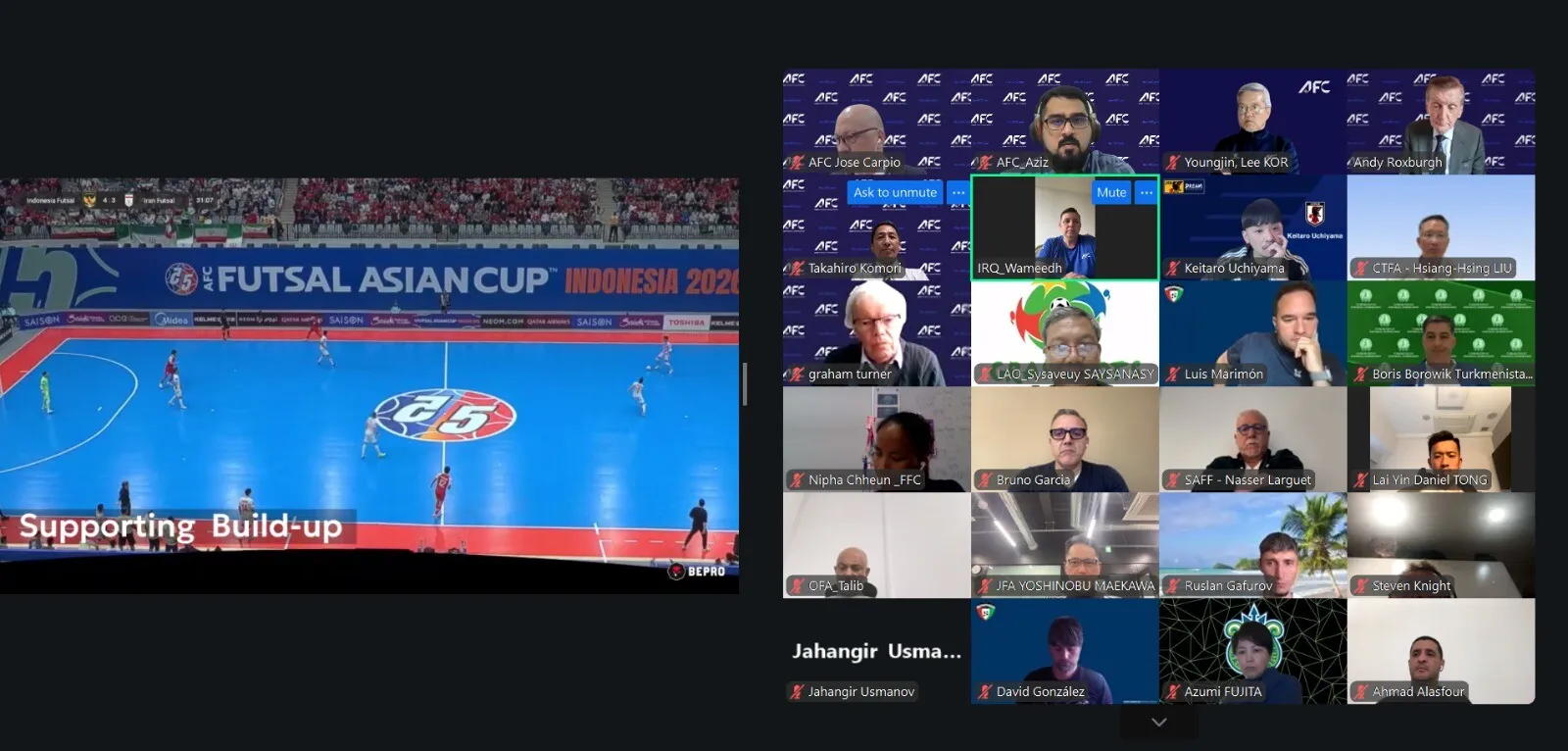
An analysis of the level of Asian teams—benchmarked against global standards—was presented as well, before a list of key priorities for futsal in Asia in terms of development was showcased, with the 90-minute session also involving plenty of robust engagement and discussions between the participants.
“Futsal still has potential that is yet to be maximised and there is big room for growth, so this will be an exciting challenge for not only futsal specialists, but for football development and grassroots aspects as well,” Komori said. “I want to take this opportunity to send out a message to all of us to be positive in building up the determination, patience, tenacity, and optimism to be able to develop futsal further.”
Related News
- Futsal & Beach Soccer Development
AFC Futsal Technical Workshop 2 strengthens coaching pathways
- Futsal & Beach Soccer Development
AFC Futsal Tutors strengthen coaching expertise at seminar
- Futsal & Beach Soccer Development
AFC Beach Soccer Asian Cup™ Thailand 2025 and AFC Women’s Futsal Asian Cup™ China 2025 technical reports available now
- Futsal & Beach Soccer Development
Experts discuss way forward at AFC Futsal Technical Workshop 2025

Item 1 of 4