


AFC Asian Cup
When Japan defeated China PR to be crowned continental champions in 2004, that was the first AFC Asian Cup final not to feature Saudi Arabia for 24 years. This incredible stat is perhaps the best testament to how dominant the Green Falcons had been in the last part of the 20th century.
Since the inception of their national team in 1957, Saudi Arabia struggled throughout the first 25 years of the team’s existence.
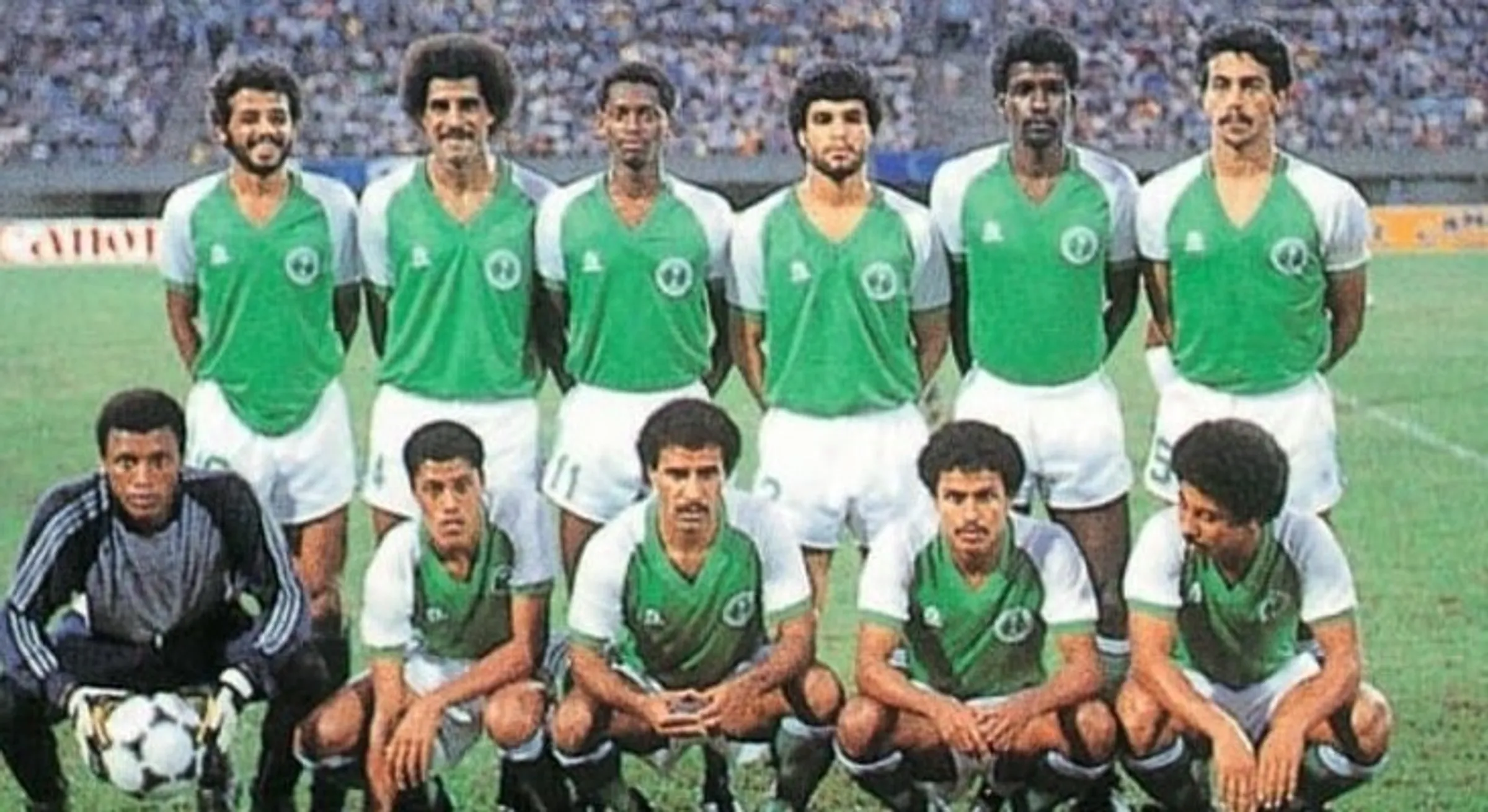
It wasn’t until the mid-eighties that the Green Falcons had their first foray into the spotlight of Asian football. Led by a 25-year-old Majed Abdullah, Saudi Arabia stunned the continent to snatch the trophy in their first AFC Asian Cup appearance in Singapore 1984 under local coach Khalil Al Zayani.
The same crop of talented footballers repeated the feat four years later in neighbouring Qatar under Carlos Alberto Parreira. Their two consecutive triumphs in the continental competition announced to the world the birth of a new Asian powerhouse. The next decade would see the best of Saudi Arabia on the pitch.
Hiroshima, November 8, 1992. Saleh Al Nuaima, Saleh Khalifa and other key pillars of the 1980s generation had by now retired, making space for youngsters like Fouad Anwar and Fahad Al Bishi; the latter had so far dazzled as the Green Falcons reached the 1992 AFC Asian Cup final, but it was third time unlucky for the Saudis as hosts Japan held out to a Takuya Takagi first-half-goal to clinch the title and stake their own claim to the supremacy of Asia.
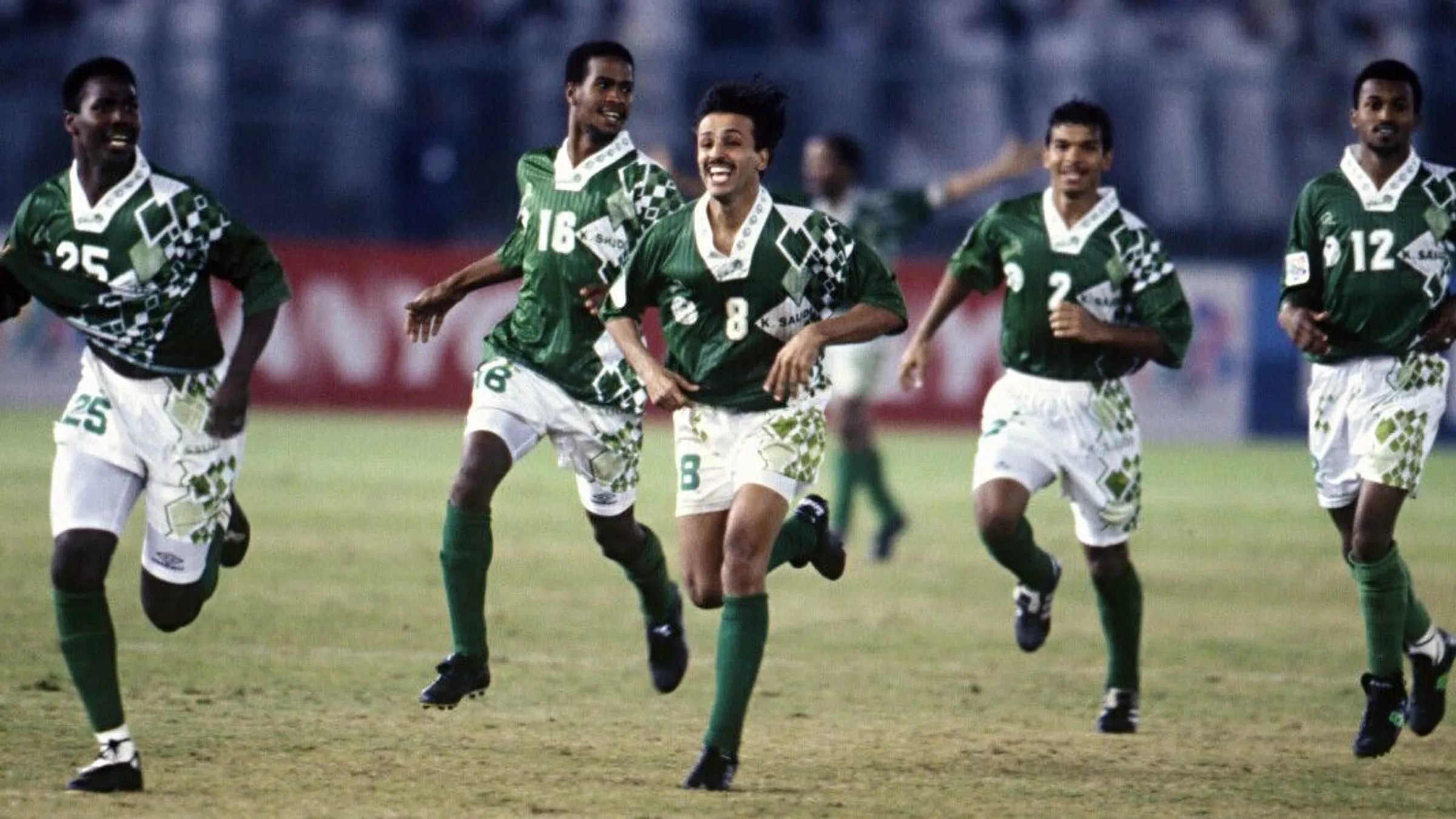
Disappointment would make way for greater joy less than two years later. An epic night in Doha saw Saudi Arabia come out on top in an unforgettable seven-goal thriller against Islamic Republic of Iran. The 4-3 victory meant it was the Saudis who would represent Asia in the 1994 FIFA World Cup alongside Korea Republic. The 40,000 fans who had travelled to the Qatari capital celebrated all night as their team secured a place amongst the world’s best for the first time in their history.
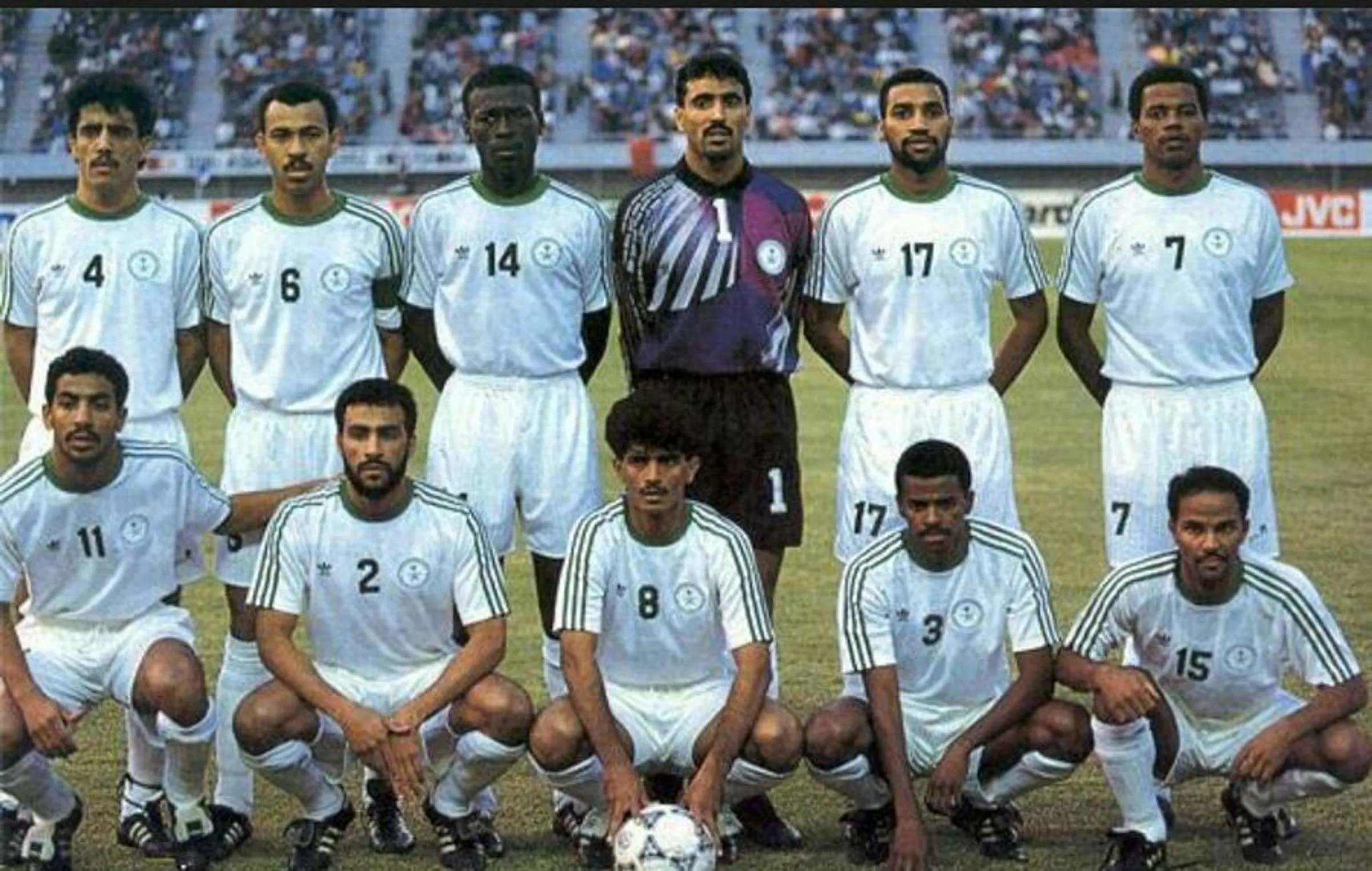
Closer to home, the era of Majed Abdullah was over, and it was the emergence of Sami Al Jaber and Hussein Abdulghani as the new icons of the team. Under the tutelage of Portuguese boss Nilo Vingada, Saudi Arabia set out to win back their continental throne, this time in the UAE in 1996.
The campaign started with a bang, as Khalid Al Temawi and Fahad Al Mehallel bagged a brace each in a 6-0 defeat of Thailand. Al Mehallel’s third goal of the tournament was the difference against Iraq and meant the Matchday Three defeat to Iran was insignificant as the Green Falcons advanced to the quarter-finals.
Zayed Sports City witnessed a memorable comeback as Vingada’s men overturned a 2-0 deficit to beat China PR 4-3 to set-up a semi-final encounter against Iran. Mohammed Al Deayea put in a performance for the ages, saving two penalties in the shootout after 120 minutes ended goalless.
Next up was the challenge of the hosts. In front of 60,000 fans, the final went to penalties after an extended stalemate. Al Deayea cemented his status as a national hero by denying Yousef Saleh, but he needed help from the upright which deflected Hassan Saeed’s spot-kick, allowing Khalid Al Muwallad to win Saudi Arabia their third continental title.
The golden 90s continued for Saudi Arabia, and Doha was again the venue for qualification to the FIFA World Cup. This time, it was a 1-0 win over Qatar that secured a place in France 1998.
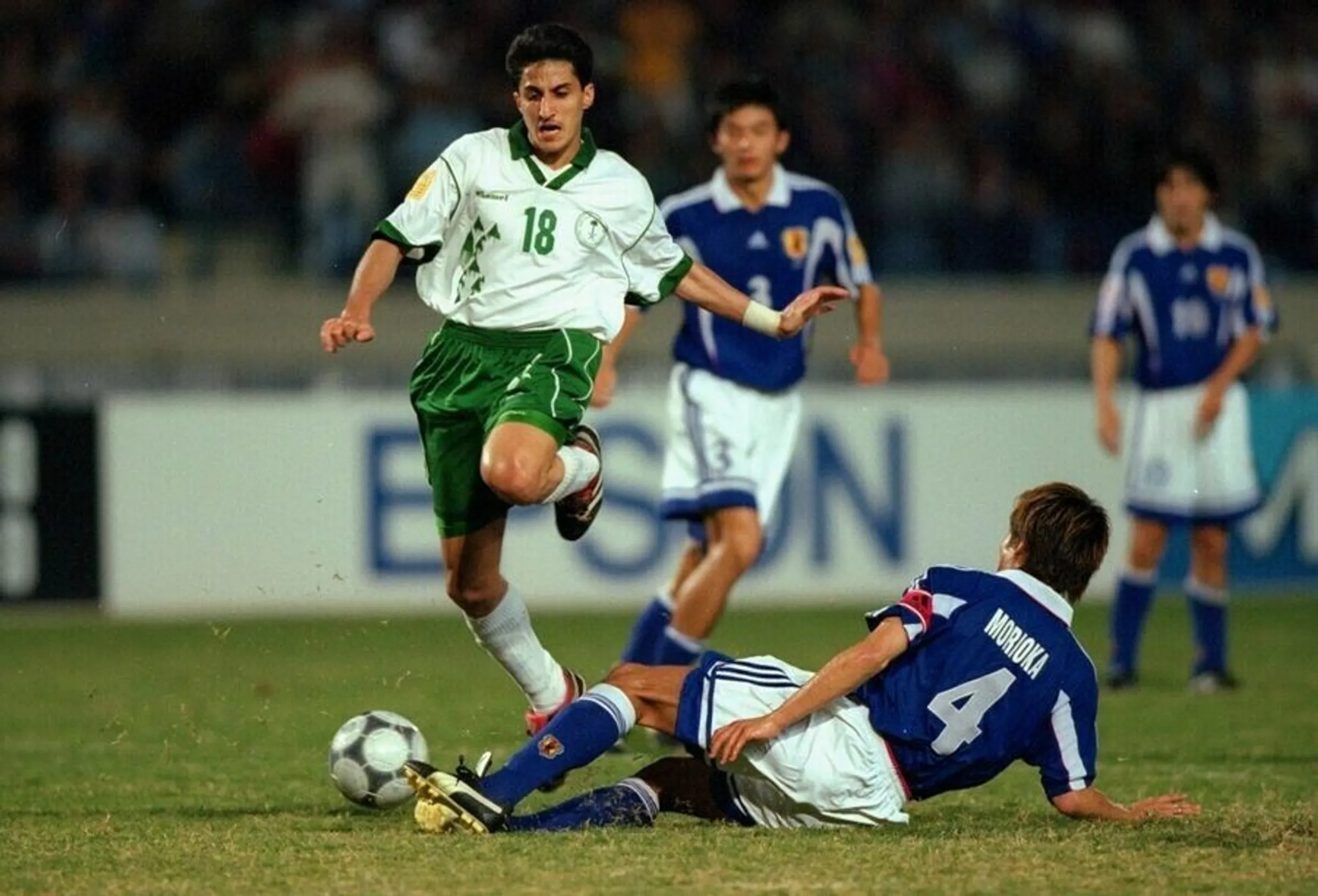
A decade and a half of unprecedented success culminated in a fifth consecutive AFC Asian Cup final appearance. An emerging generation led by Milan Macala and featuring names like 2000 AFC Player of the Year Nawaf Al Temyat and youngster Mohammed Al Shalhoub defeated Kuwait and Korea Republic in the knock-out stages en route to the final, but a fourth title ultimately eluded them as Shigeyoshi Mochizuki’s goal won it for Japan.
That defeat in Beirut signaled the end of one of the continent’s finest teams but their 1980s and 1990s side will always be remembered as one of Asia’s great national teams.
Related News
- AFC Asian Cup
Greatest AFC Asian Cup teams: Kuwait (1980s)
- AFC Asian Cup
Greatest AFC Asian Cup teams: IR Iran (1970s)
- AFC Asian Cup
AFC Asian Cup Qatar 2023™: Tickets for grandest ever showpiece on sale now! Prices start as low as QAR 25
- AFC Asian Cup
Six Asian Games stars who could shine at Qatar 2023
- AFC Asian Cup
Japan dominate, new champions emerge

Item 1 of 5