
FIFA World Cup
After reviewing the 2006 edition last time around, we now look at the 2010 FIFA World Cup in South Africa which was not only a monumental occasion for the African continent but also for Asia as two AFC representatives, Japan and Korea Republic, made it to the knockout rounds while Australia and DPR Korea also scripted the history of their own.
Luis Suarez brilliance stops Korea Republic
After the dream run into the semi-finals of the 2002 edition that they co-hosted, Korea Republic had to return home in disappointment from Germany in 2006 despite securing their second-best points haul in the group stages of a FIFA World Cup. But 2010 was a more rewarding year for the Taeguk Warriors.
Reaching the tournament after going 14 unbeaten matches in the Asian qualifying campaign, the Koreans came up against 2004 European champions Greece in their Group B opener in Port Elizabeth, and the Taeguk Warriors put on a show in front of 30,000 plus spectators at the brand-new Nelson Mandela Bay Stadium.
Otto Rehhagel's Greece went 1-0 down within seven minutes as Lee Jung-soo volleyed in a corner arriving at the far post unmarked. Such was their dominance, it was somewhat surprising it took them until the second half to double the lead when Manchester United winger Park Ji-sung capitalised on a defensive error to seal the 2-0 victory.
The second game pitted Huh Jung-moo's side against Diego Maradona's Argentina – the two had faced each other as players in the 1986 FIFA World Cup. And there was to be no upset as heavy favourites Argentina cruised to a 4-1 win, powered by a Gonzalo Higuain hat-trick, while Lee Chung-yong netted for the East Asians.
Korea Republic went into their third and final group game needing at least a draw against Nigeria to make the last 16. They had the early chances, but it was the Super Eagles who broke the deadlock through Kalu Uche 12 minutes in, only for Huh’s side to level before the break as Lee Jung-soo scored from a Ki Sung-yueng set-piece.
Park Chu-young then curled in a free-kick past Vincent Enyeama as the Koreans established a 2-1 lead only to see the Nigerians claw back a point with a Yakubu penalty. However, after Greece were beaten by Argentina, the 2-2 draw proved enough for the Taeguk Warriors to progress as they created history by reaching the knockout rounds for the first time outside of Korea.
It was Group A winners Uruguay who were Korea Republic's opponents in their first FIFA World Cup knockout round game since 2002. Park Chu-young hit the woodwork with a brilliant free-kick, but it was the South Americans who took the lead through Luis Suarez eight minutes after kick-off in Port Elizabeth.
After missing several chances to find an equaliser, the Koreans finally scored in the 68th minute as Lee Chung-yong canceled out Suarez's opener with his second of the campaign. However, Oscar Tabarez's side would have the last laugh as 23-year-old Suarez scored his second with an exquisite finish in the 80th minute.
It was a case of what could have been for Korea Republic as Uruguay went on to reach the semi-finals where they were edged by the Netherlands. Though the overlying feeling was they deserved more from a tournament where they played some great football, the 2010 edition remains one that the Koreans can look back on with pride.
Japan write a new chapter on foreign soil
Japan were drawn into Group E where they were joined by the Netherlands, Denmark and Cameroon. Takeshi Okada's side may have been the lowest-ranked team among the four sides, but they stepped up on the biggest stage.
The Samurai Blue did not have the best of build-ups to the competition as they suffered a string of defeats, including a 2-0 loss to Korea Republic, in pre-tournament friendlies meaning that it was Cameroon who went into the opener in Bloemfontein on the front foot.
But it was Japan who broke the deadlock in the 39th minute as a Daisuke Matsui cross made its way to the back post where CSKA Moscow midfielder Keisuke Honda brought it under control and slotted past veteran Cameroon goalkeeper Hamidou Souleymanou to make it 1-0.
Except for a Stephane Mbia strike that rattled the crossbar in the 87th minute, the Japan backline largely managed to keep the likes of Samuel Eto'o and Eric Maxim Choupo-Moting at bay to seal their first FIFA World Cup win on foreign soil – their two previous victories having come at home in the 2002 tournament.
Up against the mighty Netherlands in their second fixture, Japan were more than a match for the Oranje in the first 45 minutes in Durban. However, Wesley Sneijder's strike in the 53rd minute meant that they had nothing to show for their efforts as they fell to a narrow 1-0 defeat.
Japan only needed a draw against Denmark to progress to the last 16, but the fans at Royal Bafokeng Stadium in Rustenburg were treated to some exquisite pieces of play as they booked a knockout berth with a 3-1 victory. The opener came straight from a free-kick in the 17th minute as Honda scored his second of the tournament with a dipping shot from 30 yards out.
Danish custodian Thomas Sorensen was once again beaten in the 30th minute and this time it was Yasuhito Endo who curled his set-piece around the defensive wall and the diving goalkeeper to make it 2-0.
But it proved to be a tense ending to the game as Denmark returned a goal through a Jon Dahl Tomasson penalty in the 81st minute. Honda would come to Japan’s rescue yet again, though, as he danced past the Denmark defence with some fine trickery before feeding Shinji Okazaki to roll the ball into the net and seal the 3-1 victory.
However, the Samurai Blue’s fine campaign would end in heartbreak in the Round of 16 tie in Pretoria as they lost out to Paraguay in a game of fine margins. After 120 minutes where Japan came the closest to scoring with a Matsui shot that hit the woodwork, the knockout tie was to be decided on penalties. Yuichi Komano’s miss proved costly for Japan as they returned home, albeit after matching their best performance at a FIFA World Cup.
Agonising exit after Socceroos recover from heavy loss
Though Australia had become a member of the Asian Football Confederation just before the start of the 2006 FIFA World Cup, the 2010 tournament was the first one that they reached after competing against the best teams in Asia. And the Socceroos had to overcome a wobbly start in the Asian qualifying campaign to confirm a place in South Africa.
Australia had suffered losses to China PR and Iraq to edge through to the fourth round of qualifiers where they then went unbeaten in eight games to seal their FIFA World Cup ticket. Germany, Ghana and Serbia awaited them in Group D of the tournament proper.
But Pim Verbeek's team did not get off to a good start as they suffered a 4-0 defeat to eventual semi-finalists Germany in Durban in a game that saw star man Tim Cahill sent off. However, they bounced back in their second group fixture, earning a 1-1 draw against the 2010 Africa Cup of Nations runners-up Ghana despite playing much of the game with 10 men.
Brett Holman capitalised on a goalkeeping error from Ghana captain Richard Kingson to give Australia the lead, but they suffered a double jeopardy in the 24th minute as Harry Kewell received his marching orders for a handball and Asamoah Gyan converted the resulting penalty to equalise for the Black Stars.
But the Socceroos avoided further damages to get their first point on board before their final fixture against Serbia – a game they had to win to stand any chance of progressing to the next stage. And it was a neck-and-neck affair in Nelspruit with little to separate the two sides for more than an hour.
But the returning Cahill then planted a superb header into the back of the net to give Australia the lead with a little over 20 minutes to play before Holman made it 2-0 for Verbeek's side. Marko Pantelic halved the Socceroos' advantage with six minutes to play, but Australia held on to collect three points.
However, their first win in South Africa would go in vain and the Socceroos players fell to their knees in disappointment as news of Germany's 1-0 victory over Ghana filtered through not much later after the final whistle. Despite matching Ghana's four-point haul, Australia were heading home after the West Africans pipped them on goal difference as the heavy opening-day defeat to Germany cost them dearly.
DPR Korea make long-awaited return
DPR Korea made it to the FIFA World Cup Finals for the first time since 1966 following a historic qualification campaign in Asia. Sailing through the third round of qualifiers unbeaten, they then held Saudi Arabia to a goalless draw in their final game to pip them to the second place and book their ticket to South Africa.
Only appearing in their second FIFA World Cup, the East Asians were up against Brazil, the most successful team in the tournament, in their Group G opener in Johannesburg. But DPR Korea had history of upsetting the odds on the grandest stage of them all, having beaten Italy 1-0 on route to the 1966 quarter-finals in England.
Brazil, ranked number one in the world, were expected to ease past DPR Korea, the lowest-ranked team in the tournament. But Selecao goalkeeper Julio Cesar was tested by Kim Jong-hun's side multiple times in a first half that saw no goals.
In fact, it took a Maicon wonder goal where he beat goalkeeper Ri Myong Guk with a strike from an almost impossible angle to break the deadlock in the second half. Elano then doubled the lead for Dunga's men before the Koreans found a well-deserved goal through Ji Yun Nam in the 2-1 defeat.
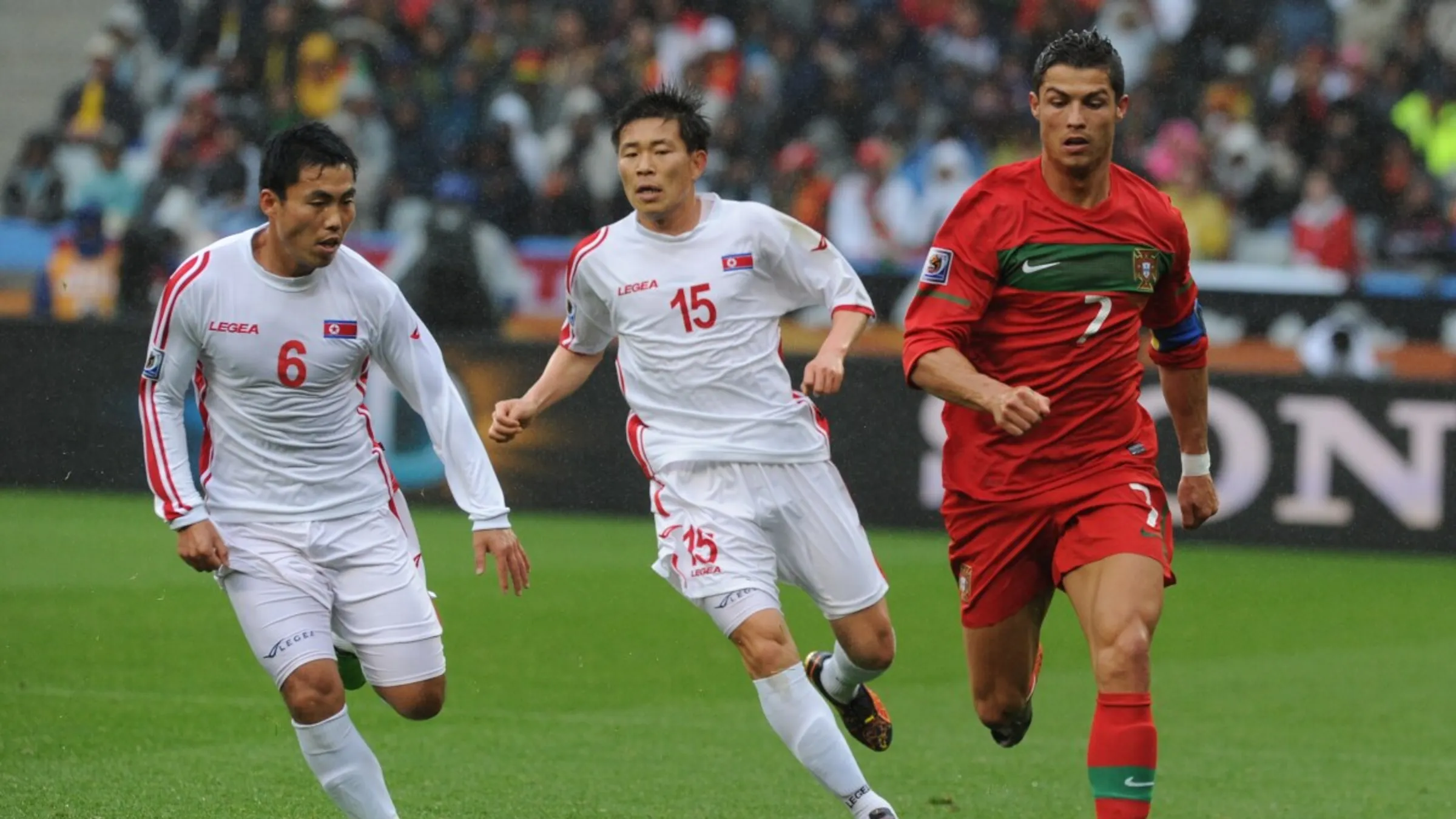
Up next were Portugal - the team DPR Korea had stormed to a 3-0 lead against in the 1966 quarter-final, only for Eusebio to score four times and send his side into the last four. DPR Korea once again looked solid as they held their opponents at 1-0 going into the break. But the Carlos Queiroz-led Portugal upped the tempo in the second half to secure a 7-0 win in which Cristiano Ronaldo rounded off the scoring with three minutes to play.
DPR Korea's 2010 FIFA World Cup campaign ended with a 3-0 loss to another star-studded side, Cote d'Ivoire, who boasted Didier Drogba and Yaya Toure within their ranks. While the East Asians ultimately returned to Pyongyang without a point, they had, in spells, gone toe-to-toe with some of the best teams – and players – on the planet.
